Building Passive Income with SEO Affiliate Marketing
When I started my first affiliate site back in 2017, I thought it would be a simple side hustle. I had read all the guides about picking a niche, writing reviews, and slapping up some Amazon links. Two years later, I had made exactly 47 dollars. The problem wasn't the niche or the products. The problem was that I had no real strategy for getting traffic. I was writing for the search engines in the worst way, stuffing keywords and hoping for the best. It took me a long time to learn what actually works, and that is what I want to share here.
SEO affiliate marketing is a specific discipline. It is not about social media followers or paid ads. It is about building a site that earns passive income by ranking for search terms that people actually use when they are ready to buy. The mechanics are straightforward: you create content that answers a question or solves a problem, you recommend a product or service, and when someone clicks your link and makes a purchase, you earn a commission. The hard part is doing it at scale without burning out.
Choosing the Right Platform and Hosting
Your foundation matters more than most beginners realize. I have built sites on Wix, on Shopify, and on WordPress. WordPress is still the best option for this kind of work because it gives you full control over SEO settings, plugins, and content structure. That said, the hosting you choose can make or break your early efforts. I started with a cheap shared plan from Bluehost. It worked fine for a few months, but as soon as I got a little traffic, the site slowed to a crawl. I moved to SiteGround and saw an immediate improvement in load times and uptime. For anyone serious about SEO affiliate marketing, a reliable host is non-negotiable.
Keyword Research Without the Fluff
Before you write a single word, you need to know what people are searching for. Tools like Ahrefs and SEMrush are industry standards for a reason. They let you see search volume, competition, and related queries. But I have found that the real insight comes from combining those tools with Google Search Console once your site is live. Google Search Console shows you exactly which queries are bringing people to your site, and that data is gold. You can spot opportunities you never considered.
When I was researching for a site about productivity tools, Ahrefs showed me a keyword with decent volume and low competition: "best note-taking app for freelancers." It was not a huge keyword, but it was specific. I wrote a detailed comparison post, linked to a few apps through affiliate programs including ClickBank, and within six months that single page was bringing in around 200 visitors a day. The commissions were modest, but the page required almost no maintenance after it was published. That is the beauty of this model.

Content That Actually Converts
Writing for SEO affiliate marketing means balancing two things: making the content useful for the reader and making it discoverable by search engines. I have seen too many people write thin pages that are just lists of products with no real context. Those pages rarely rank well, and when they do, they do not convert. People can smell a sales pitch from a mile away.
Instead, I aim for a conversational tone. I describe my own experience with a product, or I walk through a scenario where the product solves a real problem. For example, when I wrote about project management tools, I did not just list features. I explained how I used each tool to manage a specific type of project, what I liked, and what frustrated me. I included screenshots created in Canva to make the comparison visual. That post now earns commissions from multiple programs including Ezoic and AdSense, which I use to supplement the affiliate income.
For the actual writing, I have experimented with AI tools like ChatGPT and Jasper AI to help with outlines and first drafts. They can save a lot of time, but I never publish their output without heavy editing. The final voice has to be your own. Readers trust a human perspective, not a machine-generated list of bullet points.
Technical SEO and Speed
Technical SEO is the least glamorous part of the work, but it is where you separate yourself from the competition. A fast, secure site with clean code will outrank a slower site every time, all else being equal. I use Cloudflare for CDN and security, and I run my sites through Google's PageSpeed Insights regularly. Yoast SEO helps with on-page optimization inside WordPress, but it is not a magic bullet. You still need to write good content.
One mistake I made early on was neglecting mobile optimization. More than half of my traffic now comes from phones and tablets. If your site is hard to navigate on a small screen, people leave. That bounce signal tells Google your content is not relevant, and your rankings drop. It is a vicious cycle.
Monetization Beyond the Basics
Most people start with Amazon because it is easy. You sign up, grab a link, and start writing. Amazon works, but the commissions are low for many categories. I have found better results with niche affiliate networks. ClickBank, for instance, has higher commissions on digital products. MonetizeMore is another network I use for premium ad placements. The key is to diversify. Do not put all your affiliate links on one network. If that network changes its terms or shuts down your account, you lose everything.
I also run AdSense on my sites as a secondary income stream. It is not huge money, but it covers hosting costs and then some. Once you have enough traffic, you can apply to Ezoic or MonetizeMore for better ad rates. They use AI to optimize ad placement, which can double or triple your ad revenue compared to AdSense alone.
Scaling Without Burnout
The biggest challenge I face is consistency. Publishing one article a week sounds easy, but after six months you have 26 articles, which is not enough to build real passive income. I aim for three to four articles per week. To do that, I batch my work. I spend one day researching keywords and outlining posts. Another day I write drafts. A third day I edit and publish. Tools like ChatGPT help me generate ideas and rewrite rough sections, but I never rely on them for final copy.
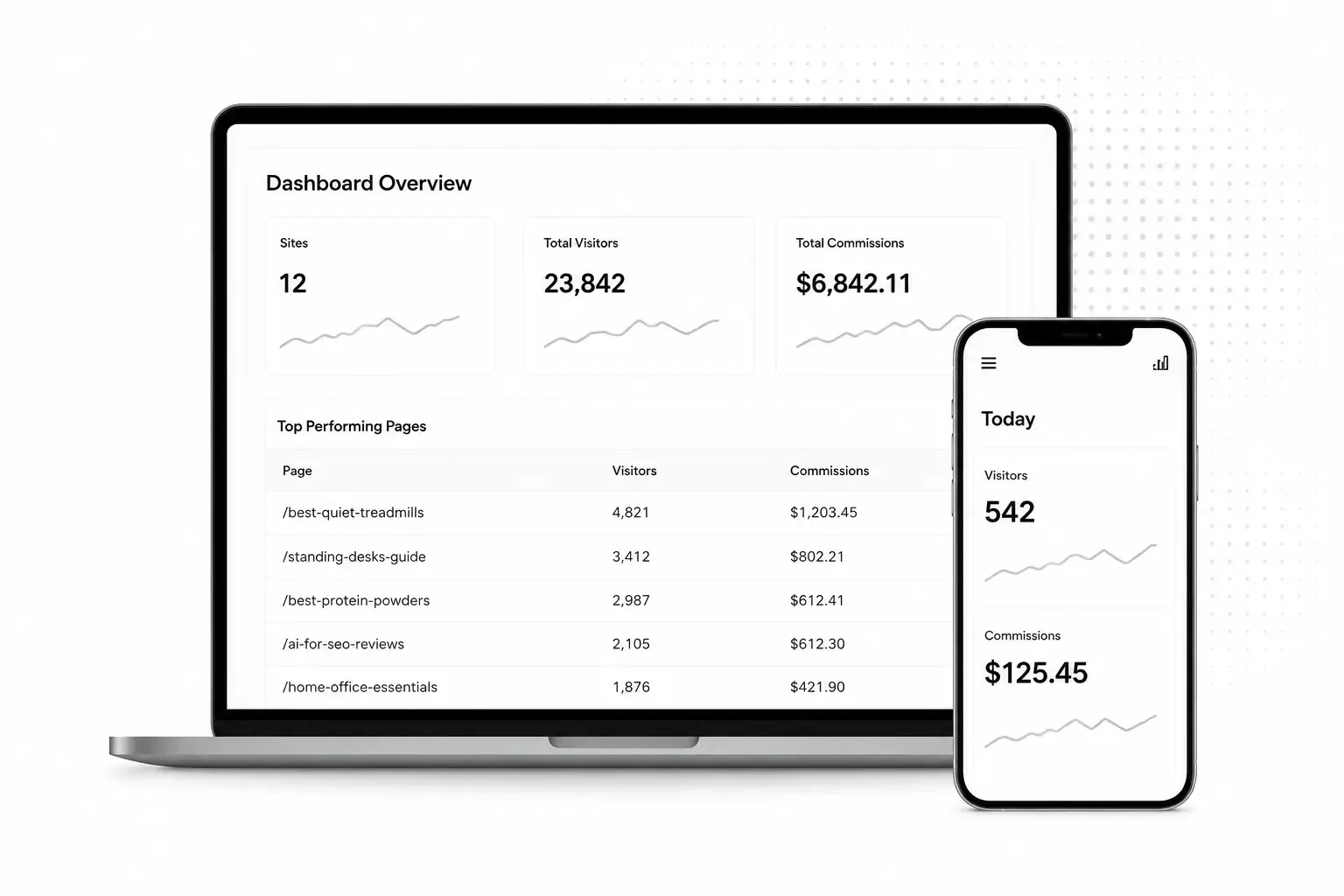
I also use Google Analytics to track what is working. If a particular type of post gets more traffic and conversions, I double down on that format. For example, "best of" lists and comparison posts consistently outperform single product reviews for me. So I write more of those. It is a simple feedback loop, but it is easy to ignore when you are busy.

Realistic Expectations
If you are thinking about getting into SEO affiliate marketing, you should know that it is not a get-rich-quick scheme. It took me over a year to see meaningful income. But once the traffic starts compounding, the growth accelerates. I now have sites that earn while I sleep, and I spend maybe ten hours a week on maintenance and new content. That is the passive part of passive income.
I have also learned to ignore the noise. There are countless gurus selling courses on how to make millions in affiliate marketing. Most of them are selling dreams, not strategies. The real work is boring. It is writing, testing, and improving. If you can do that for a year, you will have a business that most people only talk about.